Climate Change

ECO-ANXIETY: CAN CLIMATE CHANGE AFFECT YOUR MENTAL HEALTH?

The first time I heard the phrase eco-anxiety was during a Climate Change workshop I attended. It immediately piqued my interest because I had never thought of the impact climate change may have on our mental health. The more research I did the more I realised that it is quite a prevalent issue especially among the youth. This pushed me to write this article on it to discuss the issues surrounding eco-anxiety and what you can do to manage it.

What is Eco-anxiety?

Eco-anxiety is the chronic or severe fear of environmental damage or ecological disaster. Eco-anxiety is like generalised anxiety and stress, but it is mainly focused on the environment. Inadvertently, this results in a sense of anxiety that is based on the current and predicted state of the environment with regard to climate change.

There is a branch in psychology that deals with eco-anxiety known as eco-psychology which focuses on people’s psychological relationships with the natural environment and its connection to their well-being and health. Many people go to nature to centre and ground themselves so it’s only natural to get anxious when such a sacred sanctuary is threatened. However, it is not listed as a diagnosable mental health disorder, but it still warrants our attention.

The gradual impact of climate change and the impending doom associated with it push people to have anxiety over their future. Anxiety triggers a fight or flight response which requires a quick solution for imminent danger. Therefore, when people observe impacts like rising sea-levels, deforestation or changes in weather patterns it can cause them to feel threatened, scared and unsafe.   

Research shows young people are feeling betrayed by governments and global leaders through their failure to take the necessary action to curb climate change which is exacerbating eco-anxiety among the young. According to an analysis by UN, by 2030 carbon emissions are set to rise by 16% instead of dropping by half which is the requirement to prevent reaching the 1.5°C mark set at COPs meetings.

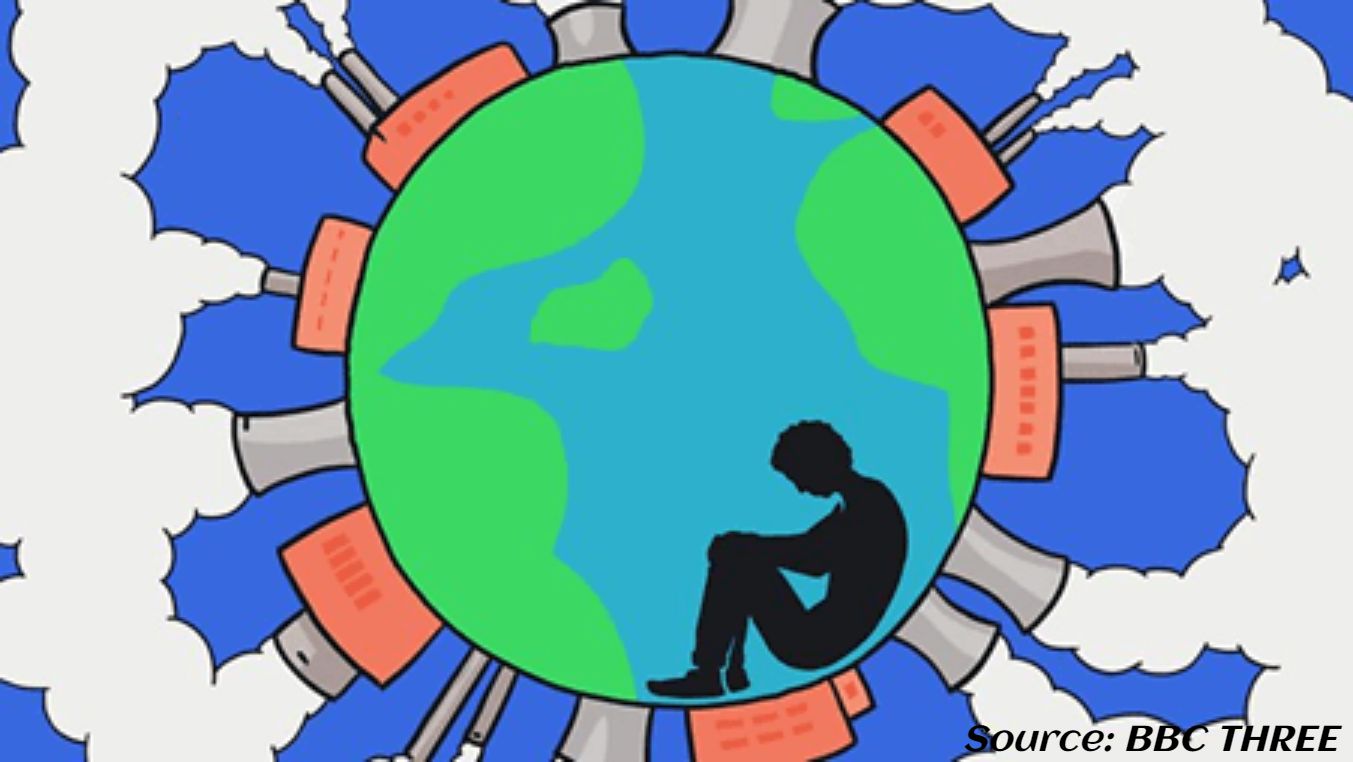
Effects of Climate Change on Mental Health

Source: Iberdrola

Climate change impact on mental health can manifest in several ways:

Anxiety, depression, substance abuse, post-traumatic stress disorder (PTSD), aggression, feeling hopeless and fearful, and feelings of trauma and shock. Chronic or severe stress can make people prone to other diseases such as high blood pressure, heart disease, sleeping problems, changes in appetite and depression.

Anxiety surrounding environmental issues can stem from real life experiences related to extreme weather such as droughts, hurricanes and wildfires. It hits harder if you have experienced it first-hand or have had loved ones go through it.

In addition, people may feel guilty due to their contribution and that of their generation to environmental degradation. In fact, young people wish to have fewer or no children to avoid them having to inherit a degraded world.

It has been observed that eco-anxiety or eco-angst mainly affects people who work in environmental jobs or as emergency health workers and first responders. Due to the nature of their jobs.

Furthermore, it affects people disproportionately, some people are more predisposed to the effects of climate change. For instance, those in indigenous and coastal communities, in low lying areas and islands and who rely on natural resources for their livelihoods (tourism, fishing and agriculture). Other groups include people of lower socio-economic status, children, young adults and elderly, displaced people, and refugees.

What can you do about eco-anxiety?  

The silver lining in this story comes in the form of what we allow ourselves to consume. We should have access to reliable and factual information albeit in moderation, make greener choices in our day to day lives, team up with like-minded individuals and partake in plant-based diets. Other environmentally conscious practices are cycling and the use of public transport. Calculate your carbon footprint and find ways to reduce it. And finally spend more time in nature the very thing you are fighting so hard to protect and appreciate and build a connection with it. It may not seem like much but this can appease you psychologically and act as a remedy to the situation. Taking positive action can greatly improve our mental health and reduce feelings of hopelessness and helplessness.

Conclusion

It is normal to feel discouraged, angry and helpless over things beyond your control. However, if these feelings are overwhelming and interfere with your daily life it is best to seek medical advice. Moreover, allow yourself to go through the motions and have compassion for yourself. Go a step further and seek emotional and social support which can really boost resilience and optimism.

Biomedical waste Waste Management

WHAT HAPPENS WHEN MEDICAL WASTE LITTERS THE ENVIRONMENT?

Medical waste, also known as biomedical waste, refers to waste generated in the process of diagnosis, treatment, immunization, or research. Although region-specific, the impact of medical waste on the environment is one that cannot be ignored. Medical waste is a source of land and water contamination especially if it is not rendered harmless before disposal.

About 85% of the waste generated from health care centres is non-hazardous. However, the remaining 15% is considered hazardous material that is either toxic, infectious, or radioactive according to WHO. Annually, approximately 16 billion injections are administered globally but many needles and syringes are not disposed of properly.

Although it is considered a method of medical waste disposal, open burning and incineration of health care waste can result in the emission of furans, dioxins, and particulate matter. Medical waste must be properly contained, segregated, and incinerated using the right equipment to prevent any adverse health and environmental impacts. For instance, the unintended release of biological hazards like drug resistant microorganisms into the environment could potentially harm the public.


MedPro Disposal (https://bit.ly/3MQeK1c)

TYPES OF MEDICAL WASTE

Infectious waste – waste that is contaminated with blood and other bodily fluids from discarded diagnostic samples, cultures, and stocks of infectious agents either from lab work or waste from patients with infections i.e., bandages, swabs, COVID-19 test kits, disposable medical devices.

Pathological waste – human tissue, organs or fluids, body parts and contaminated animal carcasses.

Sharp waste – needles, blades, syringes and disposable scalpels.

Chemical waste – solvents and reagents used for laboratory preparations; disinfectants, sterilant,  heavy metals contained in medical devices (mercury in thermometers) and batteries.

Pharmaceutical waste – expired, unused and contaminated drugs and vaccines.

Cytotoxic waste – waste containing substances with genotoxic properties (highly hazardous substances that are mutagenic or carcinogenic) such as cytotoxic drugs used in cancer treatment and their metabolites.

Radioactive waste – products contaminated by radionuclides including radioactive diagnostic material or substances from radiotherapy.

Non-hazardous waste – waste that does not pose any particular biological, chemical, radioactive or physical hazard for example office waste.

MAJOR SOURCES OF HEALTH CARE WASTE


  • Hospitals and health facilities
  • Research centres and laboratories
  • Mortuaries and autopsy centres
  • Nursing homes
  • Blood banks and collection services
  • Animal research and testing laboratories

It should be noted that High Income Countries tend to generate more hazardous waste than Low Income Countries (LICs). However, medical waste from LICs is often not separated into hazardous and non-hazardous waste. Therefore, the quantities of hazardous waste could be higher. Alarmingly, in LICs some medical operators tend to mix medical waste with domestic waste which can be potentially dangerous.

EFFECTS OF MEDICAL WASTE ON THE ENVIRONMENT


  • The healthcare industry accounts for 4.4% of worldwide carbon emissions which is equivalent to greenhouse gas emissions from 514 coal power plants. This would make it the fifth-largest carbon gas emitter if categorized as a country.
  • Medical waste contains harmful microbes that could potentially affect health workers, patients, and the public. It may also expose people to drug resistant micro-organisms which could have detrimental effects.
  • It could also contribute to air pollution through the incineration of medical waste that will release particulate matter, dioxins, heavy metals (mercury, lead, cadmium) and furans into the atmosphere. Incineration also generates ash residue that contains traces of the chemical, biological and radioactive compounds. If not treated properly it could be an environmental hazard.
  • Untreated medical waste should be disposed of in the right manner. When this waste is disposed of in landfills it can lead to the contamination of soil, surface and ground water.
  • Chemical waste from hospitals can lead to the release of chemical compounds into the environment. These include lab reagents, disinfectants, or solvents. For instance, formaldehyde – used in disinfection, preservation, and embalming, breaks down into formic acid and carbon monoxide when exposed to the atmosphere. These compounds are harmful and can make animals sick, affect their ability to breed, change their behaviour and appearance or reduce their lifespan.
  • The increased use of single-use products such as masks, personal protective equipment, bandages, gauze, or specimen collection containers, result in the disposal of large amounts of plastics.

WHAT CAN BE DONE?

  • Raising awareness of the risks related to health care waste.
  • Promoting safe practices and regulations that limit the volume of wastes generated and ensure that waste segregation is a priority.
  • Advocate for environmentally friendly management options to safeguard the public during collection, handling, storing, transporting, disposing and treating waste.

Medical waste can have serious health and environmental impacts however, reusing single use products like bandages and gauze may lead to the transmission of infections to patients or reduced use of energy could put patients’ lives at jeopardy, but on the other hand both scenarios lead to increased environmental pollution. Therefore, it is difficult to know where to draw the line between environmental conservation and public health. However, this does not mean wastefulness should be encouraged in medical centres.

SOURCE

https://www.who.int/news-room/fact-sheets/detail/health-care-waste


Sustainable Living

Is Your Favourite Brand Really ‘Going Green’?

‘Going green’ sells, more and more people are willing to spend more on a product or service if it comes from a sustainable company, which ideally should be a plus for the environment. However, this has taken a turn for the worst and has led to the perpetuation of greenwashing among companies and corporations.

WHAT IS GREENWASHING?

Greenwashing occurs when an organization or company devotes their time and resources to marketing their products and services as environmentally friendly when they are not, instead of actually implementing environmentally friendly practices.

Globally, more people are becoming environmentally conscious, therefore they lean towards purchasing goods and services that are green. This is coercing companies and manufacturers to shift towards eco-friendly products to attract these consumers. However, some companies’ description of their products’ sustainable qualities may be irrelevant, exaggerated, or false.

For example, some companies still continue to label products as chlorofluorocarbons-free (CFC-free) yet CFCs were banned and are no longer in use. This information while true, is irrelevant to the product. It is only included to make consumers believe that the company is environmentally conscious.

Greenwashing may sound harmless, but it can be potentially dangerous. Consumers are misled into purchasing products that are described as eco-friendly but, the company has not taken any steps to abide by environmental standards leading to further pollution, emissions, and unsustainable utilization of resources. It exploits genuine environmental concerns thus creating confusion and scepticism towards genuine eco-friendly products.

In addition, companies may focus on the positive environmental aspects of their business and leave out the negatives. These companies are aware of the negative impact their business have on the environment and choose to focus on the positive impact they have made or intend to make. Companies in the petroleum industry have been known to do this in their advertisements. The companies may mislead consumers into believing that if they pay extra for their fuel, they will be contributing to the protection of forests from logging yet there is no guarantee that it will be done.

When companies resort to greenwashing, they use buzzwords that tend to be vague to appeal to the consumer. These companies use words such as sustainable, recyclable, biodegradable, cruelty-free, non-toxic, and eco- or environmentally friendly. It is important that one takes special attention to identify these instances of greenwashing.


                                    Vague statements used in greenwashed products (Photo by CulinaryLore)

WAYS TO SPOT GREENWASHING

You should do your part by calling out greenwashing when you spot it and spend your money on brands that are legitimate. One can identify greenwashing through:

  • Images that give an impression of nature or marketing products in a visually pleasing package i.e., leaves, rivers, mountains.
  • Emphasis on one green feature of a product and omitting the negative features.
  • Greening of a dangerous product to make it appear safe or clean or claiming it has environmental benefits when it doesn’t.
  • Sharing unsupported claims with zero evidence to support that a product is clean or organic.
  • Jargon or information that cannot be easily understood by the average person; only scientists can understand.
  • Stating that they are greener than other companies. This should be substantiated with evidence.
  • Falsifying certifications or labels to mislead consumers. One should seek out products with trusted certifications.
  • Be on the lookout for marketing language that doesn’t overstate or imply a more significant environmental benefit than it could be. Marketing should be clear on whether they are referring to the packaging, the product itself or a part of it.

GREEN MARKETING

Companies should employ green marketing if they are genuinely ‘going green’. Green marketing is the marketing or advertising of products that are legitimately produced through environmentally friendly practices. The products and services are produced in a transparent and honest way by following the guidelines listed below:

  • Should be free of toxic and ozone depleting substances,
  • Should be easily repaired or reused,
  • Should not use excessive (non-biodegradable) packaging,
  • Should be made from renewable and biodegradable material,
  • Should be manufactured in a sustainable fashion,
  • Should be recycled or produced from recycled material and,
  • The company should offer an end-of-life program for its products.

If a company markets themselves as green, it should have the appropriate documentation and certification to prove this. Furthermore, it is easy for green marketing to turn to greenwashing if the organization does not stick to the environmental standards, they have set for themselves.

I believe we should take it upon ourselves to do the necessary research to find out if the green products we buy are genuinely environmentally friendly and go a step further by calling out any false claims made by companies.

Biodiversity

Human-fueled Threats to Marine Life

70% of the Earth’s surface is covered by ocean and is home to 700,000-1,000,000 species, including my personal favorites, dolphins and orcas. It offers a wide array of habitats for marine creatures ranging from sea grass, mangroves, coral reefs and the water column. Unfortunately, our beautiful oceans are used as a dump site with 80% of pollution that ends up in the ocean coming from land-based activities. Effluent from factories and industries are major sources of pollution in rivers, a main conduit of pollution that winds up in oceans.

Pollution and other human activities are posing a serious threat to the state of the ocean and its corresponding marine life. Here are the major threats:

Climate Change

Climate change is inarguably the worst threat to marine life. Global warming is causing changes to the ocean chemistry and this in turn will affect marine species that depend on the stability of the ocean. One of these changes includes warming of the ocean water which reduces the ability of oxygen to dissolve into the sea water leading to diminished oxygen levels in the ocean for marine life. In addition, coral reefs are sensitive to warming oceans; the warm temperatures lead to coral bleaching and eventually death.

Coral bleaching occurs when colourful, microscopic algae called zooxanthellae is expelled by corals due to warming waters. The zooxanthellae live in the coral and the two have a mutually beneficial relationship; they depend on each other for survival. Once the algae are expelled the coral fades (turns white) and appears to be bleached. Without the algae the coral will eventually die. The Great Barrier Reef, the world’s largest reef is almost halfway bleached.

Secondly, ocean acidification caused by increased carbon dioxide in the atmosphere dissolving in the ocean leads to the eroding of shells of animals such as lobster, oysters, and shrimp.

Thirdly, climate change is also causing rising sea level which affects the habitat of many marine species.

Over-fishing

Fishing is not inherently bad; it only becomes an issue when we catch more fish than can be replenished naturally. This leads to overfishing. 31% of fish stocks are already depleted (overfished) according to FAO.

The main fishing gear used for commercial fishing is drift netting and trawling which has contributed to another problem, by-catch. By-catch is the unintentional catching of sea creatures when fishing for a different species (fish and shellfish). Examples of marine animals that get entangled in the gear are whales, dolphins, turtles, seals, sharks, and seabirds. In fact, a significant number of marine creatures are killed unintentionally by commercial fisheries.

Plastic waste

There are more than five trillion pieces of plastic swimming in our oceans. All the plastic bottles, straws, bags, and packaging material we have ever used wind up in oceans. It is estimated that 8 million tonnes of plastic are discarded into our oceans each year. The danger of all this plastic in our oceans is that it can result in choking and entangling of sea creatures. In addition, the plastic breaks down into micro-plastics that sea creatures mistake for food. This is bad because large amounts of plastic are found in the bellies of whales, and tiny fish feed on micro-plastics which can lead to biomagnification. Biomagnification is a condition in which compounds (pollutant) accumulate in the tissue of an organism as it travels through the food chain.

Agriculture and Sewage discharge

When nutrients are discharged into oceans in excessive amounts as sewage, fertilizers, or nitrogen oxides from burning fossil fuels, this can lead to eutrophication. Eutrophication is the excessive growth of marine plants such as algae which causes an algal bloom. This limits the sunlight that will penetrate into the water and reduces the availability of oxygen. When oxygen levels plummet it affects marine creatures, coral reefs and other vital habitats. Sewage tends to be the main source of nutrients in cities and agriculture dominates in rural areas.

Coastal development

Coastal development is change caused by human activities on an area of land adjacent to the coastline. It leads to the destruction of natural land and the fragmentation of coastal habitats. This development includes building structures that are on or near the coast either for protection, business, residential, communication or recreation. Impacts resulting from development are dredging and coral/sand mining for construction material or increased runoff of sediment and pollutants. Currently, 2.4 billion people live within 100km of the coast, putting undue pressure on coastal ecosystems.

Ocean noise

Ocean noise is sound generated by human activity that can obscure marine animals from detecting natural sounds in the ocean. Sources of ocean noise are ships, military sonar and seismic exploration for oil and gas. This is harmful to marine animals such as whales and dolphins because it can interfere with their communication channels. The noise can also prevent other animals from meeting a mate, detecting predators, and finding food.

Deep-sea mining

Deep-sea mining is a potential threat to marine animals. It is the process of retrieving mineral deposits from the deep sea. The depletion of terrestrial deposits of minerals is stimulating interest in deep sea mining. However, they are still in the exploration stage of deep sea mining to assess the size of mineral deposits.

Solutions

The establishment of Marine Protected Areas (MPAs)–to protect and conserve ecologically and biologically significant marine areas by regulating human activities.

On the same note Locally Managed Marine Areas (LMMAs) should be established. These are marine conservation areas managed by the local coastal community. In fact when MPAs and LMMAs are merged, it can increase the conservation effort and enhance interconnectivity between the two which will result in a widespread and better managed conservation area.

Banning of destructive fishing methods such as trawling.

Regulations on overfishing and animals caught as by-catch should be followed and hefty penalties put in place to any organizations that do not adhere to them.

Use eco-friendly and reusable products and avoid single use plastic such as plastic straws, bottles and bags.

Support local marine conservation organizations i.e Local Ocean Trust – Watamu

Conclusion

Clearly, the state of our oceans is critical and a lot needs to be done to conserve them.


Climate Change

Debt-for-Nature Swaps: A Win-Win for Climate and Development

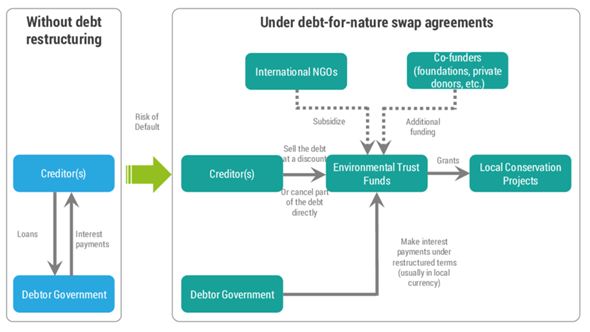
Debt-for-nature swaps are making headlines as a form of climate finance that reduces a country’s debt in return for environmental commitments. With the cost of mitigating climate change estimated to be between $3-6 trillion a year globally by 2050 according to International Monetary Fund (IMF), innovative financial mechanisms like debt-for-nature swaps are crucial for supporting developing countries in their transition to a more sustainable and climate-resilient economy.

What are Debt-for-Nature Swaps?

These are financial instruments that allow countries to free up fiscal resources to combat climate crisis and protect nature and biodiversity. By doing this, countries can focus on sustainable development without incurring heavy financial burden. Creditors provide debt relief in return for a government’s commitment to decarbonize the economy, invest in climate-resilient infrastructure, or protect biodiversity.

For instance, a debt for nature swap can be an agreement between a creditor (bank or lending government) and debtor (developing country) to allow portions of a debtor’s foreign debt to be forgiven. This is done in exchange for commitments to invest in biodiversity conservation and environmental policy measures. This is most common in instances where debtor countries are at a high risk of defaulting loans and payments.

What are the benefits of debt-for-nature swaps?

A General Illustration of a Debt-for-Nature Swap by Christoph Nedopil

Debt-for-nature swaps offer several benefits. For debtor countries, they provide an opportunity to reduce external debt while investing in environmental conservation and climate change mitigation. For creditor entities, they offer a way to absolve themselves of high-risk debt relations. For the environment, they provide a means to protect biodiversity and promote sustainable development.

Challenges and Limitations

Despite the benefits, debt-for-nature swaps also come with challenges and limitations. Concerns have been raised about the potential risks associated with fluctuating exchange rates, inflation, and fiscal or liquidity crises in debtor countries. Additionally, there are concerns about debtor countries’ potential loss of legislative leverage and sovereignty to foreign entities, especially when bilateral or multilateral swaps are employed. These bonds and swaps can be set aside in favour of the agenda of the creditor and may not align with local conservation needs.

Debt relief can also lead to mismanagement of resources and the risk of corruption especially in low-income countries with a tendency to favour the elite and exclude communities at the grassroot that are primary custodians of natural resources.

Case Studies

Several countries have successfully implemented debt-for-nature swaps. For example, in 1987, Conservation International arranged the world’s first debt-for-nature swap, forgiving a portion of Bolivia’s foreign debt in exchange for the Bolivian government setting aside 3.7 million acres of land adjacent to the Amazon Basin for conservation purposes. In Africa, Seychelles in collaboration with United Nations Development Programme (UNDP), the Global Environment Facility, Global Environment Facility, and the Nature Conservancy was able to protect up to 400,000 km² of ocean through a debt forgiveness of $27 million.

Conclusion

Debt-for-nature swaps offer a promising approach to addressing the climate crisis while promoting sustainable development. While there are challenges and limitations to be addressed, the benefits of debt-for-nature swaps make them an important tool in the fight against climate change. As the global community continues to seek innovative solutions to the climate crisis, debt-for-nature swaps are likely to play an increasingly important role.

Climate Change

CARBON CREDITS & CARBON OFFSETTING

WHAT TO KNOW ABOUT CARBON CREDITS

According to a recent Intergovernmental Panel on Climate Change (IPCC) report, projected global warming may reach 0.8oC to 1.2oC above pre-industrial levels between 2032 and 2052. The rise in temperature is predominantly due to anthropogenic activities such as burning of fossil fuels, deforestation, and industrial emissions.

Companies seeking to offset their greenhouse gas (GHG) emissions have turned to carbon credits and carbon offsets. This is because governments have been pressuring the private sector to limit GHG emissions forcing these companies to turn to financial products that help them offset their environmental footprints through carbon credits and offsets.

What are carbon credits?

Carbon credits life cycle (https://carbonwise.co/how-are-offsets-used-the-life-cycle-of-a-carbon-offset/)

Carbon credits can be thought of as a tradeable permit that allows a polluter to emit one tonne of carbon dioxide or the equivalent amount of a different greenhouse gas. A carbon credit represents the right to emit or release emissions. A single credit represents 1 ton of CO2e (carbon dioxide equivalent) that the company is allowed to emit. They can be purchased by an individual or a company to make up for carbon dioxide emissions that come from industrial production or transport. Meaning institutions can emit carbon dioxide emissions and in exchange the world’s large reserves of forest will soak up the emitted CO2. The tradable component of carbon credits makes it a very lucrative market, known as the carbon market, with revenues of about $95B in 2023 and is projected to grow in the future.

The number of credits issued to a particular company or organization represents its emissions limit. If a company can limit its emissions below its cap, it is considered compliant and has a surplus of carbon credits. These can be retained for future use, or they can be sold immediately into the carbon compliance market overseen by a regulatory body. This market is known as a cap-and-trade market.

If the company cannot keep emissions under its limits, they are non-compliant and must make up that difference. Over-emitters turn to the carbon market to purchase carbon credits from an under-emitter within the cap-and-trade network.

How are Carbon Credits Created?

Carbon credits are based on the cap-and-trade model that was used to reduce sulphur pollution in 1990. They are most often created through agricultural or forestry practices although a credit can be made by nearly any project that reduces, avoids, destroys, or captures emissions. Individuals or companies looking to offset their own GHG emissions can buy these credits through a middleman or those directly capturing the carbon (voluntary market). Carbon credits, meanwhile, make it more expensive for companies in regulated industries to pollute by charging them per unit of carbon they emit, which has the effect of disincentivizing future emissions.

Alternatively, they can buy the credits through compliance or involuntary markets. Involuntary markets are those set up by governments when they set a cap on how many tons of emissions certain sectors such as oil, transport, energy, or waste management, can release. Companies must trade to stay within the limit.

There are about 75 carbon compliant markets in operation around the world.

Regulators, businesses, and environmentalists have debated globalizing a cap-and-trade market for carbon. However, it is challenging to agree on a common time frame, common price, common measurement, and transparency. The voluntary market’s rapid acceleration is largely driven by recent corporate net-zero goals and interest in meeting international climate goals set out in the Paris Agreement to limit global warming to 1.5 degrees Celsius over pre-industrial levels.

Drawbacks of Carbon Credits

Carbon credits can easily be labelled as green washing. A company can claim they have bought carbon credits from a business outside a regulated exchange, and this does not lower the overall amount of GHGs released by buyers. It gives corporations a way to claim they are eco-friendly without reducing their overall emissions.

The voluntary market operates largely unchecked by federal or local regulators. The market does not have a cap on how many tons of emissions can be offset and the driving oversight is a set of standards. There are a few respected standards organizations that validate carbon credits. Verra, a non-profit has set the most widely used standard to validate credits called the Verified Carbon Standard. Since its launch, it has registered 1,750 projects around the world and verified 796M carbon units.

What is carbon off-setting?

Carbon credits and carbon offsets are often mistakenly used interchangeably, but they are not the same. However, the unit of measurement for both is tonnes of CO2e. Carbon credits are a measurement unit to cap emissions while carbon offsets can be thought of as a measurement unit to compensate an organization for investing in green projects or initiatives that remove emissions.

Carbon offsets are designed to help consumers or organizations counteract the impact of future or past emissions. Offsets can also be traded in a voluntary carbon market. Carbon offsets occur when a polluting company invests in a project that reduces GHGs for example a project that deals with sustainable clean energy to counteract the use of fossil fuels. In a nutshell, carbon offsetting cancels out emissions produced in one place with the reduction of emissions in another place i.e. projects such as wind farms or tree planting exercises. Another way to look at it are carbon offsets are a way to make amends for committing an environmental sin of polluting the air with GHG emissions.

According to the World Bank, carbon credits regulate around 18% of the world’s emissions, while carbon offsets track far less than 1%.

It is important to note that offsets are not created or distributed by a specific regulatory body. They are also not limited to individual regulatory jurisdictions and can be traded on any number of voluntary markets around the world.

Conclusion

Carbon credits and carbon offsets are a great incentive theoretically to deter and curb unregulated carbon emissions. However, there needs to be increased monitoring of the projects to ensure adequate absorption and capture of GHGs that these carbon markets propose to be undertaking. In the long run this will make carbon markets a major solution to climate change.

Waste Management

Everything You Need To Know About Waste Colonialism

Waste colonialism refers to the disposal of hazardous waste by high GDP countries into low GDP countries. The term was first recorded in 1989 at the United Nations Environmental Basel Convention when African nations raised concerns over the issue.

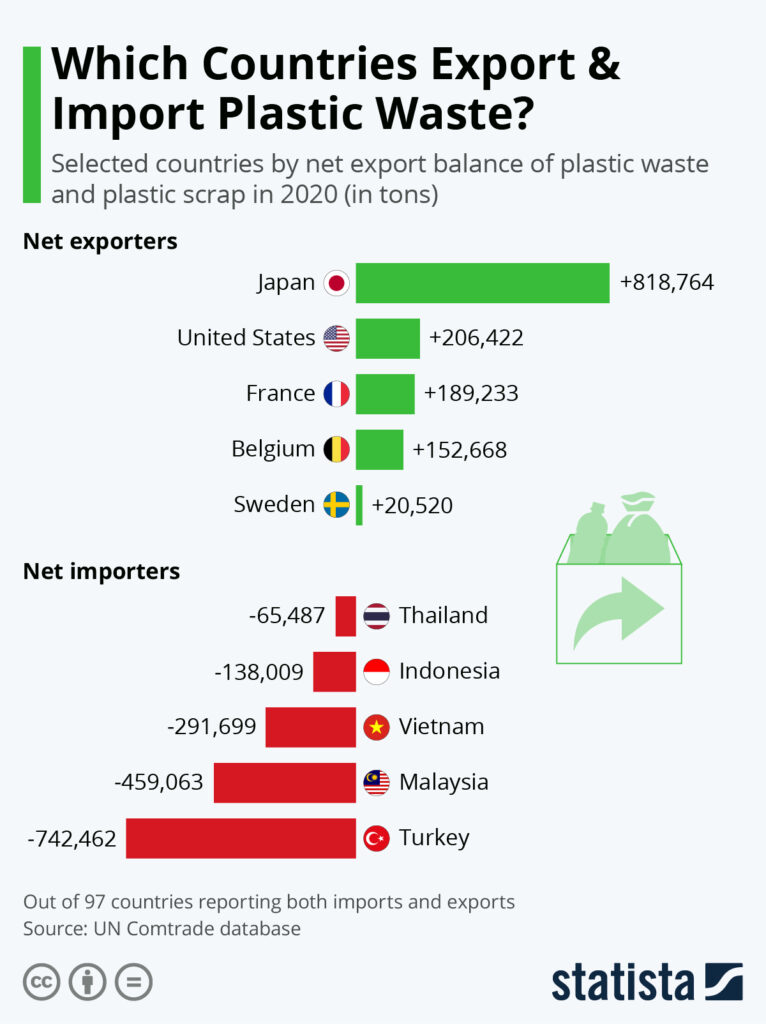
Apart from hazardous waste, high GDP countries have also been exporting their plastic and paper waste to poorer countries in a bid to cut down on their carbon emissions from incineration of the waste. These poor countries often lack effective waste management systems.

Until January 2018, about half of the world’s plastics and paper products were being dumped and recycled in China. However, in a bid to protect its environmental interests and the health of its populace, China banned imports of plastics and paper. This ban was also propelled by the mixing of hazardous wastes in the solid waste imported by China.

This left countries in the West struggling with the build-up of plastic and paper waste, as they scrambled to look for new markets for the waste. In 2020, a huge consignment of 141 containers filled with plastic waste being exported to Turkey from Germany was rejected by authorities as they had just banned the importation of mixed plastic waste.


Exporters and Importers of Plastic Waste – Statista

The problem

High GDP countries are the world’s largest producers of waste yet some of them are labelled as the world’s top recyclers. In 2017, Germany was named the world’s top recycler by the World Economic Forum. However, according to 2021 data from Statista, Germany was the leading exporter of plastic waste in the European Union.

Companies in the fossil fuel industry also continue to lobby for more plastic manufacturing and have set their eyes on Africa as the next market. During the US-Kenya trade negotiations in 2020, the American Chemistry Council – an industry group representing the world’s largest petrochemical companies, proposed Kenya as a future supply hub for US-made chemicals and plastics to other African countries.

If this deal had come to fruition, Kenya would have imported up to 500 million tonnes of plastic waste per year from the US. However, Kenya has neither the recycling capacity nor the storage capacity for this waste. Not only would this have led to more plastic waste in landfills, but Kenya would have had to lift one of the world’s strictest ban on single-use plastics.

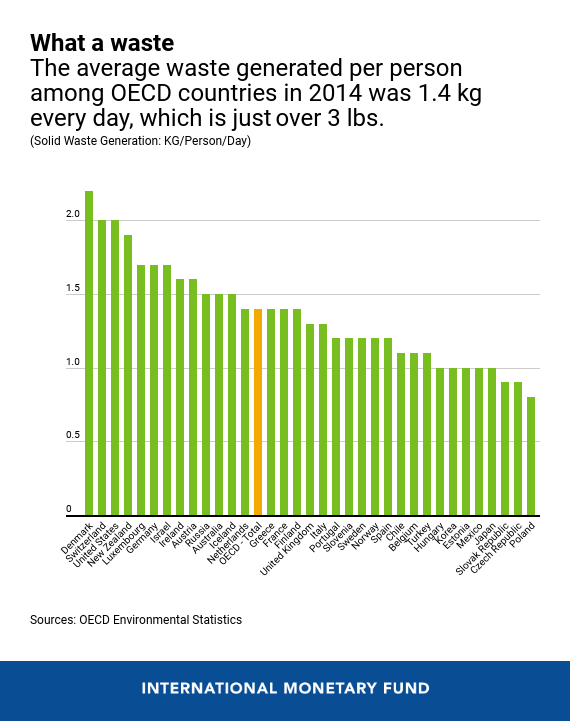
High GPD countries generate twice as much waste per capita in comparison to low GDP countries. Lower-income countries already face challenges with their own solid waste and when higher-income countries export their solid waste, they are only exacerbating the global environmental risks brought on by plastic waste.

Who is fighting back and how?

In Asia, a historic leap against waste colonialism was made in 2022 when the US-based organization Ocean Conservancy (OC), retracted its 2015 report that blamed the global plastic waste problem on the continent. This was due to the fact that the report ignored the role played by countries in North America and Europe in plastic waste production. In addition, the report also proposed garbage incineration as a solution which led to years of greenhouse gas emissions.

To make up for its past actions, the OC has partnered with the Global Alliance for Incinerator Alternatives (GAIA) to begin a community- and sector-based restorative process. The restorative process prioritizes on plastic reduction policies.

In Africa, the Global Alliance for Incinerator Alternatives (GAIA) and the Break Free from Plastic (BFFP) Africa continue to create awareness on the impact of waste colonialism. During Africa Day 2022, the two organizations together with 69 individuals and 136 organizations released a public statement calling on African leaders to stop waste colonialism in Africa.

What more can be done?

The GAIA + BFFP Africa public statement made some recommendations to what can be done in the fight against waste colonialism. Although these recommendations were made to African governments, they are applicable to all developing nations. The recommendations are:


  • Prevention of plastic waste dumping
  • Protection of existing and new legislation upholding right to a safe, clean and healthy, toxic-free environment
  • Exercising their right to refuse shipments of hazardous and plastic waste as provided by the Prior Informed Consent (PIC) Procedure and Information Exchange of the UNEP + Rotterdam Convention
  • Enforcing existing legislations that restrict and prohibit waste imports like the Basel and Bamako conventions
  • Adoption of national systems that are inclusive of waste pickers in waste management decision-making processes
  • Investing in ongoing discussions around global plastic treaty at the local and regional levels to address problems in the entire plastic value chain

What do you think of waste colonialism, let us know in the comment section.

Biodiversity

Biopiracy: The Unethical Quest To Own Bioresources

WHAT IS BIOPIRACY?

Indigenous communities live closely with nature and over the years, knowledge on genetic resources has been passed on from generation to generation which is known as indigenous or traditional knowledge. This includes skills and practices that are developed within a community often forming part of its spiritual and/or cultural identity. Traditional knowledge can be found in agricultural, technical, ecological, scientific, and medicinal knowledge.

It has been common practice for researchers to rely on indigenous knowledge on properties of plants, animals, microbes, and chemical compounds in search of new bioresources. Researchers will collect these bioresources and eventually confirm their effectiveness and potential use. However, when this is done without consent and excludes local communities from commercial profit, it becomes biopiracy.

Biopiracy is the act of utilizing traditional or indigenous knowledge of natural resources for commercial gain without recognizing or compensating the holders of the information or getting their consent. Biopiracy occurs in the pharmaceutical, agricultural and industrial sectors. It can be patent-based, non-patent or simply misappropriations.

Patent-based biopiracy involves the patenting of inventions that are based on bioresources and/or traditional knowledge. Those involved will extract both resources and information without any official authorization and lock out the locals from any profits earned from the commercialization of the bioresources. An example of this is the patenting of a neem tree seed extract in an antifungal spray by W.R Grace, a U.S. multinational corporation in 1994. Fortunately, after backlash from India, this patent was overturned in 2000 by the Environmental Protection Organization as it was determined to be neither new nor inventive.

Non-patent biopiracy is quite like patent-based with the only exception being the form of intellectual property (IP) control used. This IP control can be achieved through plant variety protection (PVP) or trademarks. Misappropriations on the other hand, involve unauthorized extraction of bioresources for research and development without adequate benefit sharing.

An example of misappropriation is the harvesting of microorganisms from Kenya’s Lake Bogoria by a British University researcher in 1992 who later sold them to companies in the Netherlands and US. It was only when the companies were sued that the people of Endorois were paid less than one percent of royalties by some of these companies.

Biopiracy does not always involve foreign researchers or multinational corporations unethically benefiting from traditional knowledge and bioresources. In some cases, governments may benefit from bioresources of its people and fail to adequately share the benefits from their commercial use. An example of this is the patenting and subsequent licensing of hoodia’s (a cactus utilized by the San of South Africa to suppress hunger and thirst during long hunting trips) appetite-suppressing derivative by the South African Council of Scientific and Industrial Research to Phytopharm that later sold the rights to license the drug as an obesity cure to Pfizer. It was only after legal action was taken that an agreement was made to pay any future royalties to the San.

BIOPIRACY AND COLONIALISM

Biopiracy is deeply entrenched in colonialism. Historically, resources from colonized countries would be forcibly acquired and then imported. Similarly, biopiracy is often instigated by foreign entities in developing countries at the expense of marginalized communities. Therefore, wealthy developed nations benefit from the resources of poorer developing nations.

WHAT IS BEING DONE ABOUT IT?

BIOPROSPECTING

Due to the negative connotation of biopiracy many researchers attempt to be on the right side of the law and practice bioprospecting. Bioprospecting is the exploration for products from natural resources that can be developed further for commercial use and benefits the society. Usually, they attempt to do it in a legal and inclusive manner.

Ideally, bioprospecting should include ethical consideration of and consent from the indigenous community, it should further include benefit sharing and material transfer agreements and compensation of the community as well as facilitate conservation efforts from the earnings.

LEGAL AND POLICY FRAMEWORKS

International legal and policy frameworks exist to prevent biopiracy. However, these laws tend to contradict each other. The UN Convention on Biological Diversity recognizes that member countries that have ratified it have sovereignty over their genetic resources, however, the Trade related Intellectual Property Rights agreement (TRIPS) of the World Trade Organisation (WTO) does not.

This inconsistency calls for the amendment of regional and national laws if African countries are to effectively protect their bioresources. In Africa, the African Union (formerly Organization of African Unity) adopted the African Model Legislation in 2000. This model law aims to protect the rights of local communities, farmers, and breeders, and regulate access to biological resources. This model law also has provisions for benefit sharing of genetic resources and plant breeder’s rights.

In Kenya, Article 69(1) of the Constitution of Kenya recognizes the State’s role in ensuring sustainable exploitation, utilization, management and conservation of the environment and natural resources. Article 69(1) also recognizes the need for equitable sharing of accruing benefit from commercialization of natural resources. The Kenya Industrial Property Institute (KIPI) also established a unit known as the Traditional Knowledge (TK) and Genetic Resources (GR) unit (TK & GR – UNIT) in 2009 whose focus is to develop a TK database for Kenya and create awareness among local communities on the importance of TK and GR.

CONCLUSION

The controversies surrounding biopiracy are tangible and must not be ignored. However, the matter is not insurmountable, especially with legal frameworks in place to protect indigenous knowledge. My hope is in the future indigenous communities can get the recognition and compensation they so rightly deserve.

We would love to hear your thoughts on this, let us know in the comment section.

Posts pagination

Welcome To Terra's Liege. If you can't reuse it, refuse it.

X